Colorbond steel fencing
Colorbond fencing cost per metre in Australia
Colorbond steel is one of Australia’s most common fence materials for side and rear boundaries. It is low maintenance, sold in a wide colour range and made from non-combustible steel. This guide explains what influences the cost of a Colorbond fence and what to check before you hire.
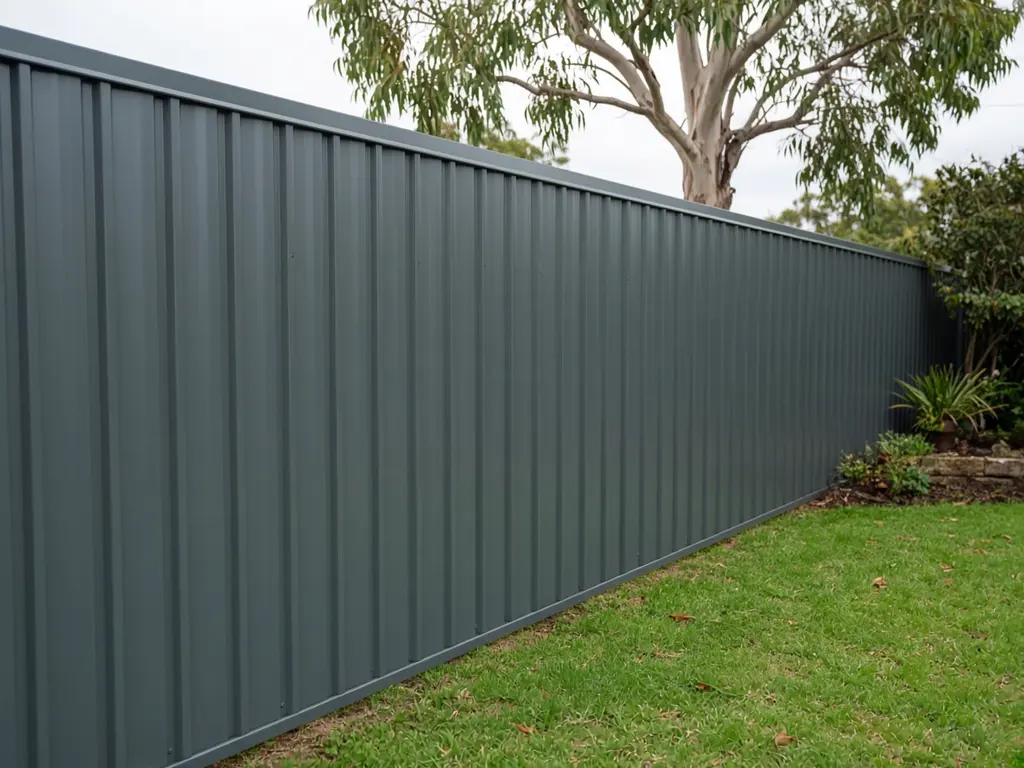
Colorbond fence cost by height
Taller fences use larger sheets, heavier posts and deeper footings, so cost rises with height. The table shows the illustrative per-metre range at the four standard heights and a 20 m example.
| Height | Per metre | 20 m example |
|---|---|---|
| 1.2 m | $70 – $135 | $1,450 – $2,700 |
| 1.5 m | $85 – $160 | $1,650 – $3,150 |
| 1.8 m | $95 – $180 | $1,900 – $3,600 |
| 2.1 m | $115 – $215 | $2,300 – $4,300 |
Illustrative placeholderThese figures are placeholders requiring validation. They are not live contractor prices or a quote.
What affects the price of Colorbond fencing
- Profile and finish: standard, premium or coastal-grade coatings and different sheet profiles.
- Colour: some colours and finishes cost more and may have different supply times.
- Posts and rails: steel posts versus timber posts, and how deep and wide the footings are.
- Height and wind exposure: taller solid fences catch more wind and may need heavier footings or engineering.
- Ground conditions: rock, roots, reactive clay or sand change digging time and footing design.
- Extras: capping, plinth boards, retaining, gates and removal of an old fence.
- Site conditionsRock, tree roots, reactive clay, sand and high water tables change how posts are set. Difficult digging is one of the biggest swing factors.
- Terrain and slopeSloping or uneven land needs stepped or racked panels and extra labour, and usually raises the per-metre rate.
- Materials and finishMaterial, gauge, profile, colour and coastal-grade coatings all move the price. Higher fences also need heavier posts and footings.
- Complexity and accessCorners, tight access, retaining walls, existing fence removal and neighbour coordination add time.
- Gates and extrasPedestrian and driveway gates, locks, pool-compliant latches and electrical or intercom work are usually priced separately.
- Local availabilityContractor availability, demand and travel time vary by region and season. Regional and remote areas often differ from capital cities.
Pros and cons of Colorbond fencing
Pros
- Low maintenance: no painting or staining, and it does not rot or suffer from termites.
- Non-combustible steel, which is why it is common in bushfire-prone areas (always check the bushfire rules for your lot).
- Good privacy and wind protection with a clean, uniform look.
- Wide choice of colours.
Cons
- Can dent or crease if hit, and cut edges need to be treated properly.
- Solid panels can look industrial and reflect heat and noise.
- Coastal and marine exposure can shorten coating life unless a suitable product and installation are used.
- Harder to alter than timber once installed.
Bushfire, coastal and wind considerations
In bushfire-prone areas, fence materials near a home may be restricted under the Australian bushfire standard AS 3959 and local planning rules. In salt-spray zones near the coast, ask which coating is appropriate and what the warranty requires. In windy locations, ask how footing depth and post spacing were chosen.
COLORBOND® is a registered trademark of BlueScope Steel Limited. FenceQuote Australia is independent and is not affiliated with BlueScope.
Questions to ask a contractor
- Which Colorbond product, thickness and colour are you quoting, and which posts and footings?
- Is the quote per metre or a fixed total, and does it include gates, capping and removal?
- How will you handle slopes (stepped or racked panels)?
- Who deals with the neighbour notice for a shared boundary?
- What licence and insurance do you hold, and what warranty applies?
Related guides
- Timber fencing costTimber paling fences: price drivers, treatment, maintenance and bushfire notes.
- Aluminium fencing costAluminium slat and tubular fencing: cost drivers, coastal suitability and styles.
- Fencing material comparisonColorbond, timber, aluminium and pool fencing compared on cost, upkeep and suitability.
- Fence installation costWhat a fence installation involves, what drives cost and how to compare quotes.
Useful official sources
Rules change and differ by council and by property. Use these official sources to confirm what applies to you before you build. Links point to each agency’s main site; use its search for the relevant topic.
Get an indicative range
Estimate in minutes, then use it to brief local contractors.
Open calculator →Frequently asked questions
How much does a Colorbond fence cost per metre?
Our calculator uses an illustrative placeholder range that you can see in the table above. Real prices vary by height, finish, ground conditions and location, so get quotes from local contractors for a firm figure.
Is Colorbond cheaper than aluminium?
Usually, yes, for a solid boundary fence. Aluminium is generally higher per metre but can suit front fences, gates, coastal areas and pool barriers better.
Is a Colorbond fence suitable near the coast?
It can be, but salt exposure affects coating life. Ask the contractor which product they recommend for your distance from the sea and what the manufacturer’s warranty conditions are.
Do I need approval for a Colorbond fence?
Many boundary fences do not need approval below a certain height, but rules vary by state, council and zone, and front fences and corner lots are often more restricted. Check with your local council.
Quote requests are opening soon
Contractor matching is not yet available in your area. Estimates are still free: use the calculator for an indicative range and read our guides while we build our contractor network.
The calculator is free and needs no account, payment or personal details. We are not currently accepting quote requests or passing enquiries to contractors.