Skip to content
FenceQuote Australia

Compare fencing types

Types of fencing in Australia, explained

A practical guide to the four fence types most Australian homeowners compare: what each is best for, what to watch out for and what to ask a contractor. For side-by-side costs see the material comparison.

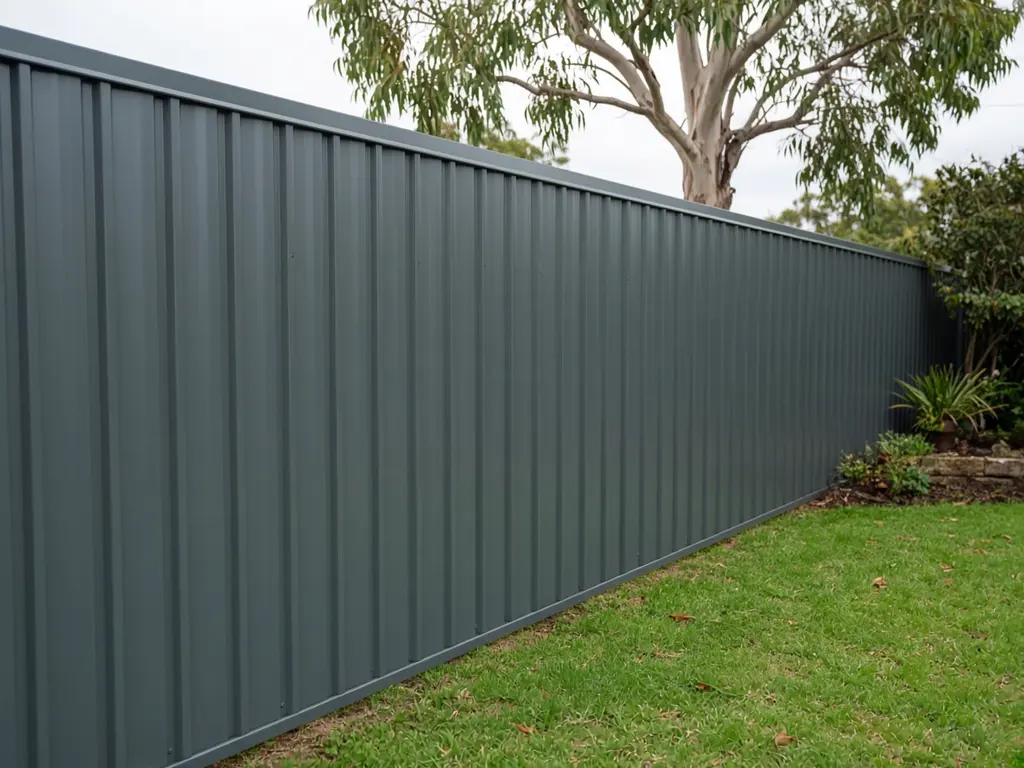
Dark grey-green Colorbond steel fence running along a backyard lawn beside a eucalyptus tree

Colorbond steel fencing

Pre-painted steel sheets fixed between posts and rails. A common choice for side and rear boundaries where low maintenance and a solid, uniform look matter.

Best for

  • Low-maintenance boundaries
  • Privacy and wind shelter
  • Bushfire-prone areas where non-combustible materials are preferred (confirm local rules)

Watch out for

  • Dents and creases from impact
  • Coastal finishes and warranty conditions
  • Footing size for tall solid fences in windy locations

Ask a contractor: Which product, thickness and colour are quoted, and how will slopes be handled?

See colorbond steel costs →
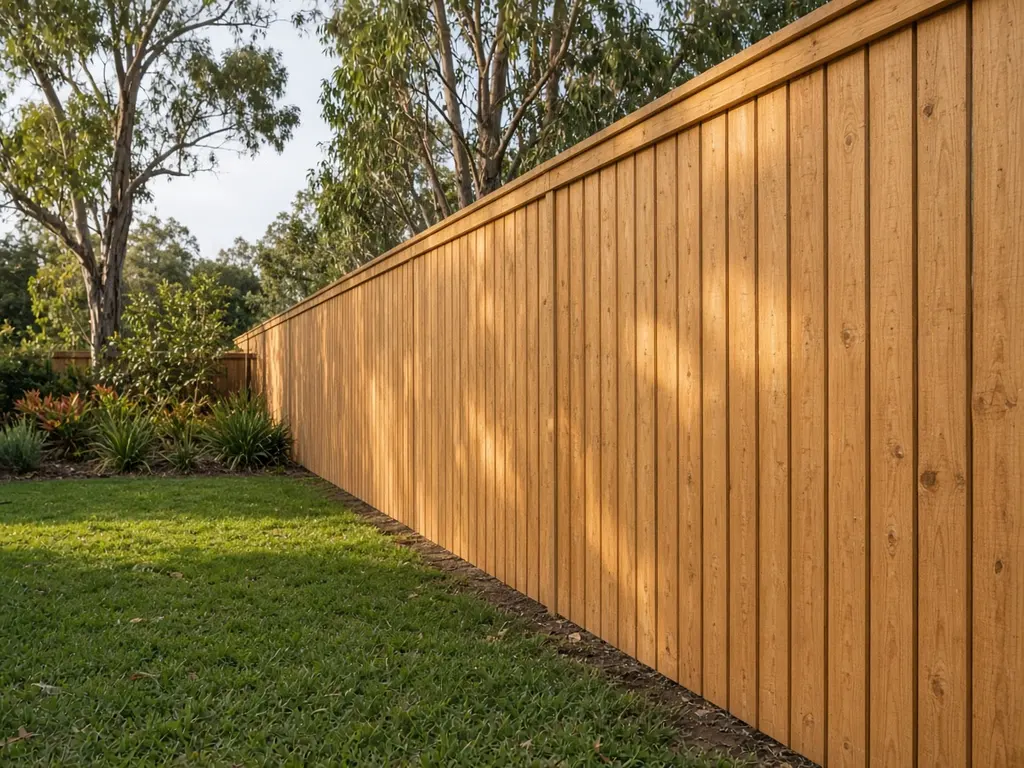
Honey-toned timber paling fence with a top rail beside a lawn and native garden beds

Timber paling fencing

Treated pine or hardwood palings on timber, steel or concrete posts. Often the lowest upfront cost for a private boundary fence, with the most flexibility in style.

Best for

  • Tighter budgets
  • Natural look that can be stained or painted
  • Easy section-by-section repairs

Watch out for

  • Ongoing sealing or staining
  • Termite and rot risk, especially at ground level
  • Combustibility in bushfire-prone areas

Ask a contractor: What treatment class is the timber, and what material are the posts?

See timber paling costs →
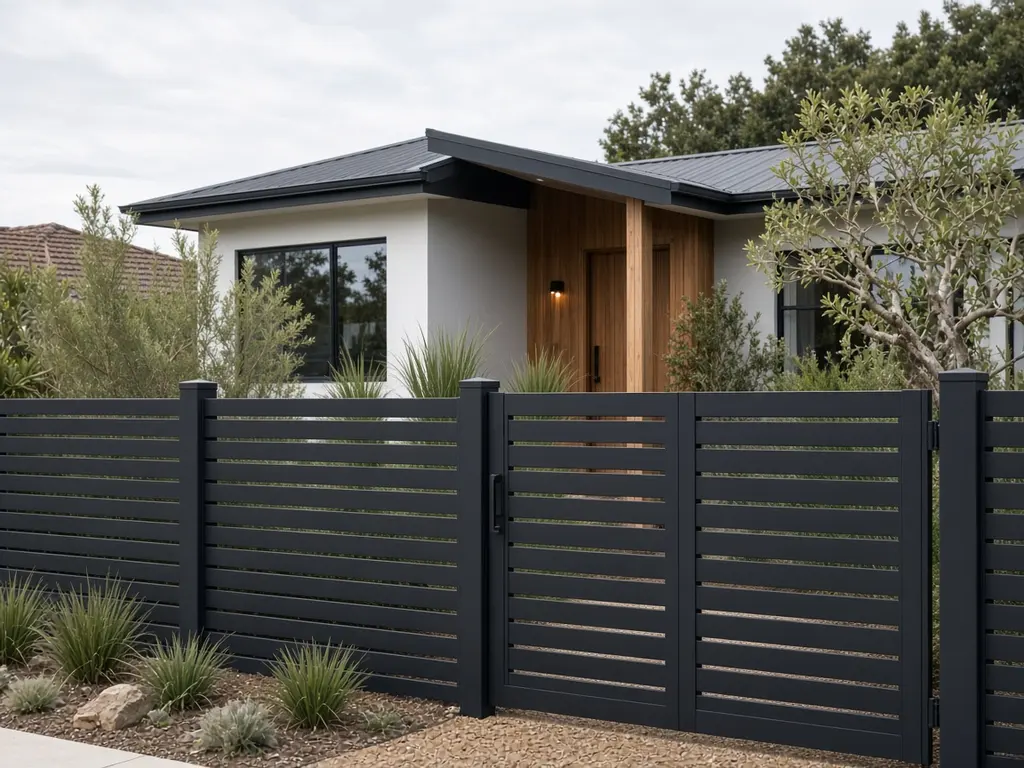
Charcoal horizontal aluminium slat fence and gate in front of a contemporary Australian house

Aluminium slat and tubular fencing

Powder-coated aluminium panels in slat or tubular designs. Rust-free and popular for front fences, gates, coastal homes and pool surrounds.

Best for

  • Front fences and gates
  • Coastal conditions (subject to finish)
  • Contemporary designs with controlled privacy

Watch out for

  • Higher per-metre cost than timber or Colorbond
  • Lighter panels can bend if hit hard
  • Custom lengths or complex slopes may add lead time

Ask a contractor: What powder-coat system and warranty apply, and how are panels raked on my slope?

See aluminium slat and tubular costs →
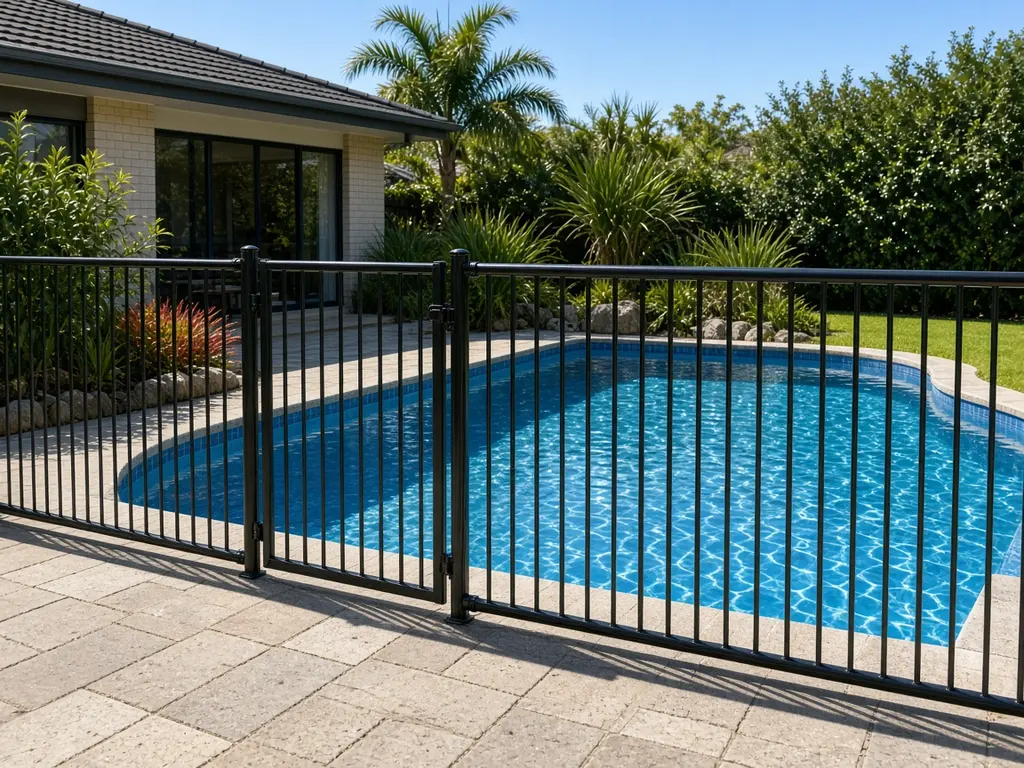
Black tubular aluminium pool safety fence with a gate around a backyard swimming pool

Pool fencing

Safety barriers designed to your state or territory’s pool rules, commonly tubular aluminium or glass, with self-closing, self-latching gates.

Best for

  • Meeting pool safety requirements
  • Keeping young children away from the water
  • Maintaining sightlines to the pool

Watch out for

  • State and territory rules, and the standard that applies to your pool
  • Gate hardware and non-climbable zones
  • Inspection and certification steps and costs

Ask a contractor: Will the finished barrier be certified to meet the rules that apply to my pool, and who arranges inspection?

See pool costs →

Images are illustrative AI-generated pictures, not photos of real installations.

Frequently asked questions

What is the most popular type of fence in Australia?

Colorbond steel and timber paling are among the most common for residential boundaries, with aluminium popular for front fences and gates and compliant barriers used for pools.

How do I choose between fence types?

Start with what the fence must do: privacy, security, pool safety, style or low maintenance. Then check local rules and bushfire or coastal conditions, and compare costs.

Can I mix fence types on one property?

Yes. Many homes use Colorbond or timber at the back, aluminium at the front and a compliant pool barrier around the pool. Check how each section interacts with local rules and neighbours.

Quote requests are opening soon

Contractor matching is not yet available in your area. Estimates are still free: use the calculator for an indicative range and read our guides while we build our contractor network.

The calculator is free and needs no account, payment or personal details. We are not currently accepting quote requests or passing enquiries to contractors.