Timber paling fencing
Timber fencing cost per metre in Australia
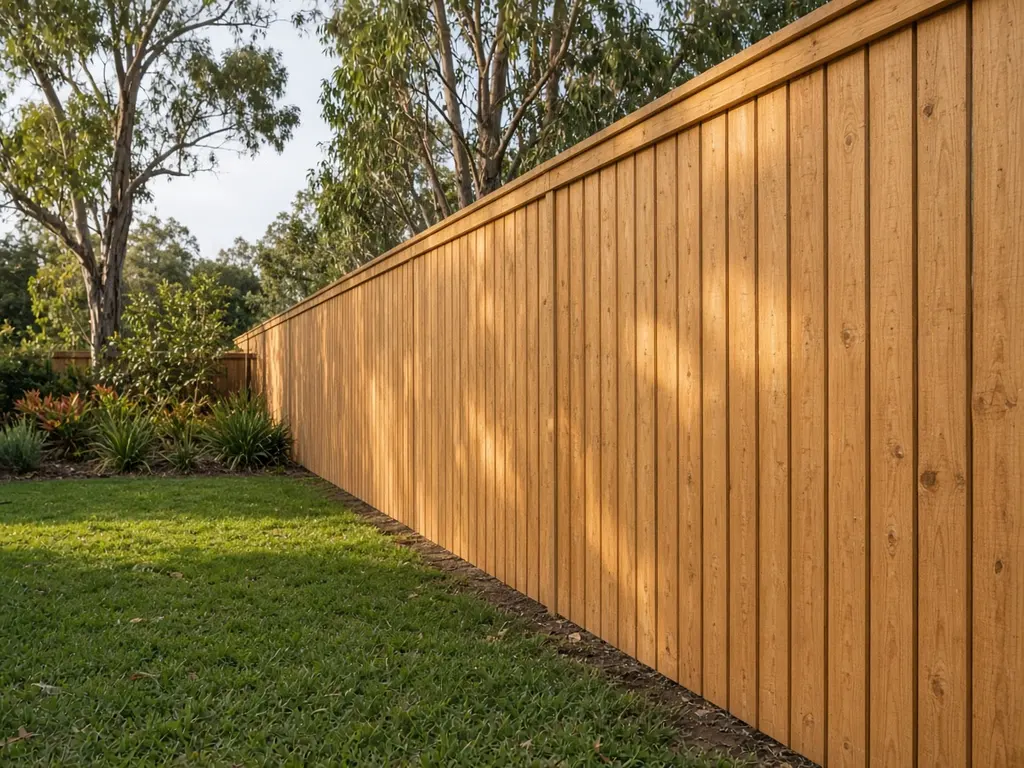
Timber paling is the classic Australian backyard fence. It is often the lowest-cost way to get a private boundary and can be built in many styles, but it asks more of you over time. Here is how timber fence pricing works and what to look out for.
Timber fence cost by height
The illustrative placeholder range below shows how cost scales with height for a standard timber paling fence.
| Height | Per metre | 20 m example |
|---|---|---|
| 1.2 m | $55 – $115 | $1,050 – $2,250 |
| 1.5 m | $60 – $130 | $1,250 – $2,650 |
| 1.8 m | $70 – $150 | $1,400 – $3,000 |
| 2.1 m | $85 – $180 | $1,700 – $3,600 |
Illustrative placeholderThese figures are placeholders requiring validation. They are not live contractor prices or a quote.
Treated pine, hardwood and other timber options
Treated pine is the most common choice for boundary fences. Timber for outdoor use is sold in hazard classes under the Australian standards: H3 treatment is generally used for exterior above-ground use, while H4 or higher is used where timber contacts the ground, such as posts. Naturally durable hardwoods can last a long time but usually cost more and are heavier to work with. Ask your contractor which class and species they are quoting.
- Lap and cap or butted palings: lapped palings give more privacy; butted palings are cheaper but can gap as timber dries.
- Rails and posts: timber, steel or concrete posts change both price and lifespan.
- Capping, plinths and decorative tops add cost but protect palings and improve appearance.
Pros and cons of timber fencing
Pros
- Usually the lowest upfront cost for a private boundary fence.
- Warm, natural appearance that can be stained or painted.
- Easy to repair or alter section by section.
- Widely available, with many contractors comfortable with it.
Cons
- Needs periodic staining or sealing to slow weathering.
- Can warp, split or rot, especially where posts meet the ground.
- Termite risk in many parts of Australia, higher in the north.
- Combustible, which matters in bushfire-prone areas.
Termites, rot and bushfire
Termite activity and moisture exposure differ a lot between regions. Tropical and subtropical areas, and any poorly drained site, put timber under more pressure. In bushfire-prone areas, combustible fences close to a building may be restricted under AS 3959 and local planning controls, so confirm what applies to your lot before choosing timber.
Related guides
- Colorbond fencing costColorbond steel fencing: pros, cons, what affects price and what to ask.
- Fencing material comparisonColorbond, timber, aluminium and pool fencing compared on cost, upkeep and suitability.
- Fence replacement costReplacing a fence: removal, neighbours, dividing fence law and cost factors.
- Fence removal costFence removal and disposal: what affects cost, asbestos warnings and utilities.
Useful official sources
Rules change and differ by council and by property. Use these official sources to confirm what applies to you before you build. Links point to each agency’s main site; use its search for the relevant topic.
Get an indicative range
Estimate in minutes, then use it to brief local contractors.
Open calculator →Frequently asked questions
How much does a timber fence cost per metre?
See the illustrative placeholder range in the table above. Actual prices depend on timber type, height, post material, ground conditions and location, so get quotes from local contractors for a real figure.
How long does a timber fence last?
It varies a great deal with timber type, treatment, exposure, drainage and maintenance. A contractor can explain the expected life and warranty for the specific materials they quote.
Is timber or Colorbond better?
Timber is often cheaper upfront and easier to modify; Colorbond is usually lower maintenance and non-combustible. Our material comparison sets them side by side.
Should I paint or stain a new timber fence?
Many contractors suggest letting new treated timber dry before sealing. Follow the treatment supplier and coating manufacturer’s guidance for your climate.
Quote requests are opening soon
Contractor matching is not yet available in your area. Estimates are still free: use the calculator for an indicative range and read our guides while we build our contractor network.
The calculator is free and needs no account, payment or personal details. We are not currently accepting quote requests or passing enquiries to contractors.